 felix@thalvomt.com
  Call Us Now: 86 135 1017 3157







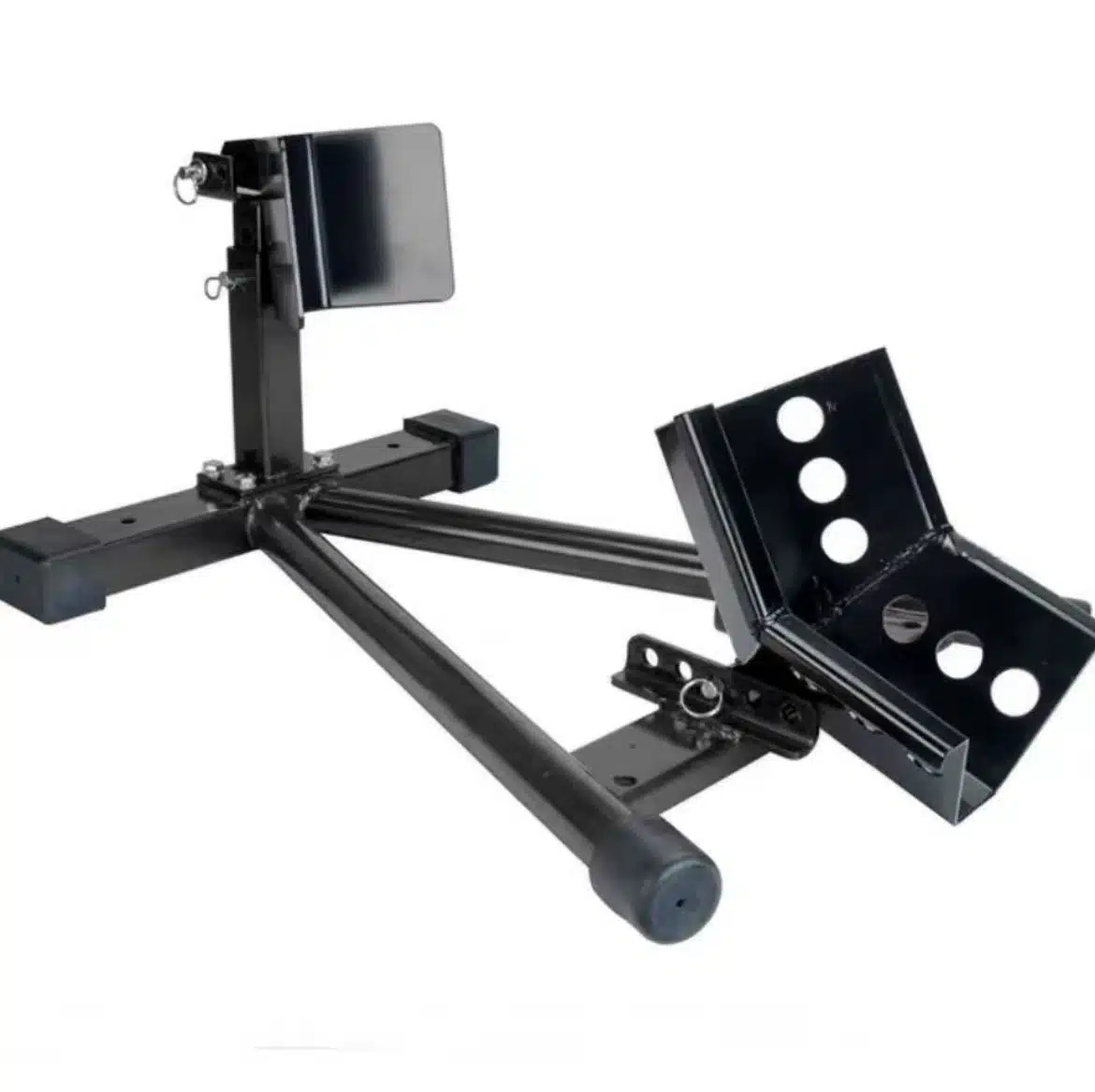
Confused about how to picking the right motorcycle stand? Learn all critical factors: stand type, lift points, weight capacity, material, compatibility & safety tips for sport bikes, cruisers and single-sided swingarm models.
Complete Buying Guide For DIY Riders
Once you build a full tool kit for basic motorcycle repairs, a reliable paddock stand becomes the most valuable upgrade for garage maintenance. Whether you need to change oil, lube the chain, replace tires or store your bike long-term, a quality motorcycle stand lifts wheels fully off the ground and eliminates unstable side stand limits.
However, many new DIY riders grab cheap universal stands without checking core specs, leading to wobbling frames, scratched swingarms or even safety tipping risks. Before purchasing a motorcycle stand, you need to match the tool to your bike’s structure, weight and daily service demands. This guide breaks down every key factor to evaluate before checkout.
Pick The Right Stand Type Based On Your Maintenance Needs
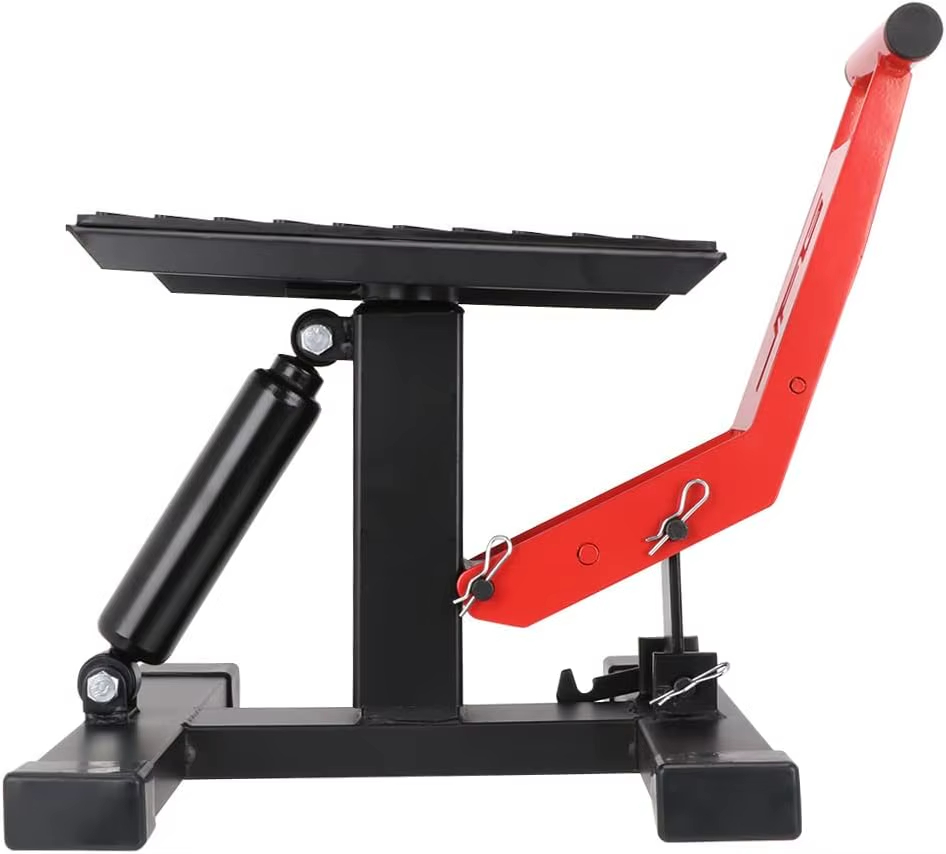
Motorcycle paddock stands split into three core categories: rear stands, front stands and combo front-rear sets. Each fits different repair scenarios, so match your usage first.
Rear Motorcycle Paddock Stand (Most Popular For Daily Use)
Rear stands work independently to lift the back wheel without extra support. They are the slam-dunk choice for 90% of regular tasks:
- Chain cleaning & lubrication
- Rear tire replacement
- Oil drain and suspension inspection
- Seasonal long-term storage
Most rear stands feature adjustable width to fit standard dual swingarms, ideal for sport bikes, naked bikes and touring motorcycles.
Front Motorcycle Stand (Must Pair With A Rear Stand)
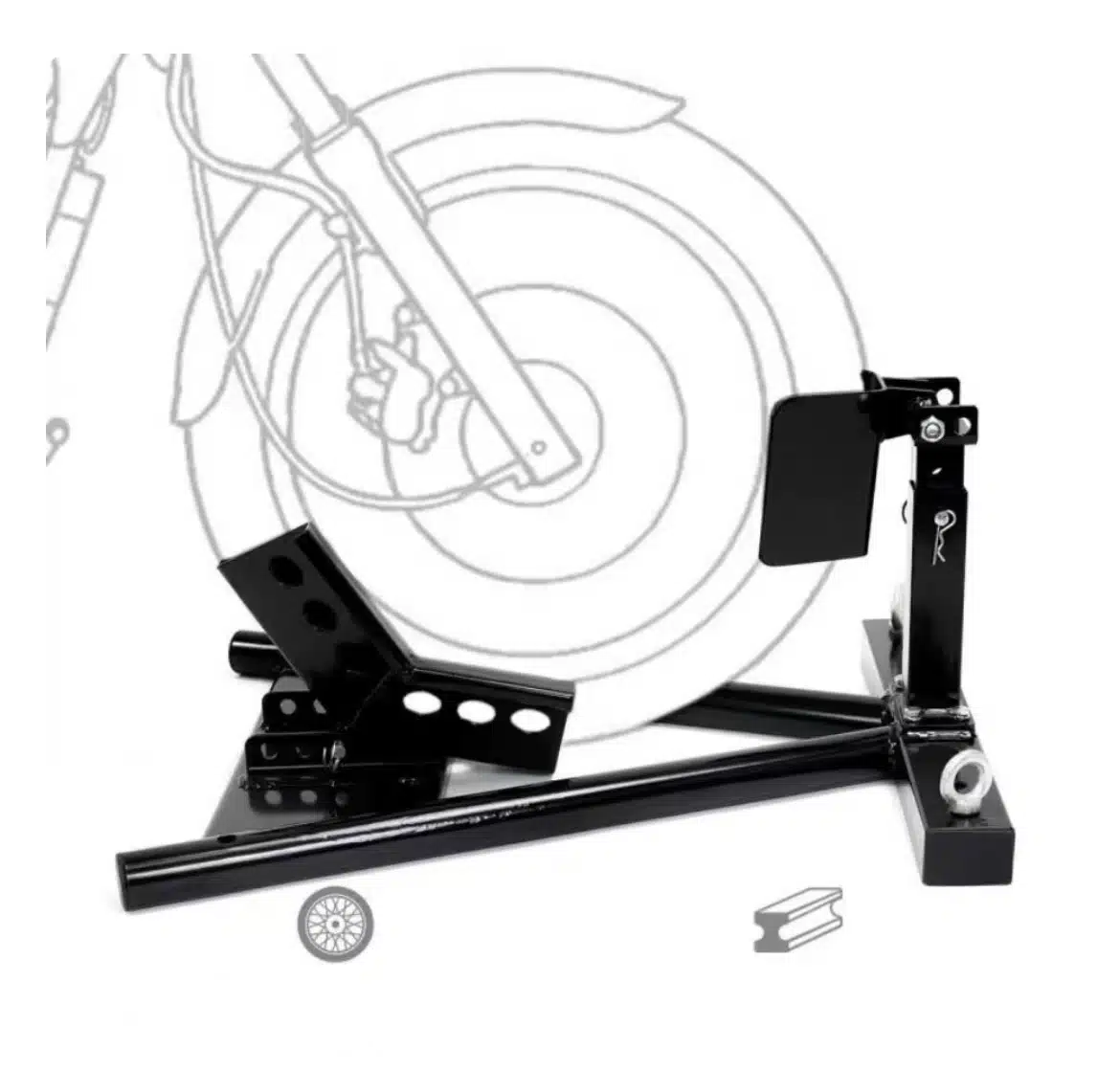
Front stands cannot support the bike alone; you have to use them together with a rear paddock stand to lift the front wheel fully off the ground. Two sub-types exist:
- Fork cup stand: Supports the bottom of front forks, only for front tire removal, low cost and widely universal.
- Triple clamp pin stand: Inserts a pin into the headstock opening, allows full fork tube disassembly for heavy suspension repairs.
Front + Rear Combo Stand Set
If you frequently swap both tires, overhaul suspension or perform full bike inspections, invest in a matched combo set. Race track riders and professional home garages almost always choose dual stands for full wheel access.
Check Your Bike’s Lift Points & Support Compatibility
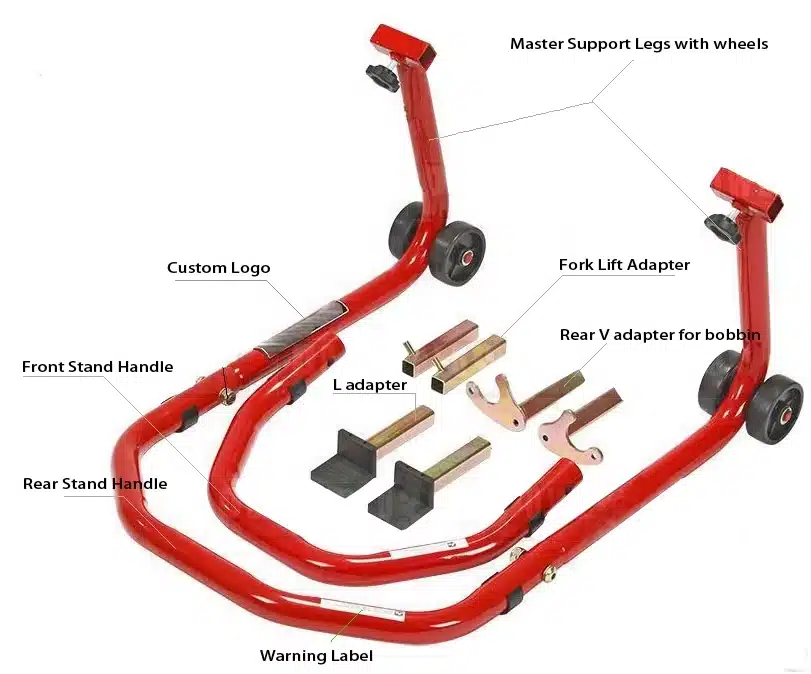
The biggest compatibility mistake buyers make is ignoring swingarm lift points. Your motorcycle’s factory structure decides whether you need hook mounts or flat platform pegs.
Bikes With Swingarm Spools / Threaded Bungs
Most modern sport bikes (Ninja 400, GSX-R, MT series) install swingarm spools or threaded holes for aftermarket spools. Choose a rear stand with curved hook ends – these lock onto spools tightly without slipping during lifting.
Bikes Without Spool Mounts (Cruisers, Retro Bikes)
Cruisers, vintage motorcycles lack spool threaded bungs. Skip hook-style stands and select models with wide flat rubber platform pegs. The large contact surface holds the swingarm frame safely and avoids paint scratches.
Special Note – Single-Sided Swingarm Motorcycles
Standard dual swingarm stands cannot fit single-sided swingarm bikes. You must buy dedicated single-sided paddock stands with offset adjustable brackets designed for mono swingarm structures.
Top Recommendation – Reversible Dual-Mount Stands
For riders with multiple bikes in the garage, reversible mounts (hooks + rubber platforms) deliver full compatibility for all motorcycle styles, saving you money on separate stands.
Verify Weight Capacity For Safe Lifting
Weight rating is a non-negotiable safety factor when choosing a motorcycle stand. Cheap budget models often cut corners on frame thickness, causing bending or tipping under heavy bikes.
- Calculate your motorcycle’s curb weight (fully fueled with stock accessories).
- Select a stand with a maximum load capacity 1.5x higher than your bike’s weight, leaving safety margin for luggage, crash bars and add-ons.
- Sport bikes (300–500 lbs): Standard 800 lbs rated stands work perfectly
- Touring & heavy cruisers (600–900 lbs): Mandatory heavy-duty 1200 lbs+ steel stands Never use a low-load stand for heavy motorcycles – frame deformation may drop your bike during maintenance.
Material & Build Quality: Steel vs Aluminum Motorcycle Stands
Two primary frame materials dominate the paddock stand market, each with pros and cons for different riders:
Heavy-Duty Powder-Coated Steel Stands
Advantages: High weight capacity, rigid anti-wobble frame, lower price, stable wide base Disadvantages: Heavier to move around the garage Best for daily home maintenance, heavy touring bikes and budget DIY riders. Powder coating prevents rust from brake fluid, chain lube and garage moisture.
Lightweight Aluminum Stands
Advantages: Portable, corrosion-resistant, easy to carry for track days Disadvantages: Lower max weight limit, higher retail price Ideal for track riders who transport stands to race circuits and own lightweight sport bikes.
Critical Build Details To Inspect
- Wide triangular base: Reduces side-to-side wobble when lifting Non-slip
- rubber padding: Protect swingarm paint and prevent sliding on concrete
- floors Reinforced welded joints: Avoid cheap plastic connectors that crack under pressure
- Long ergonomic handle: Less arm strength required to lift heavy bikes
Adjustability & Ease Of Use
A great paddock stand balances universal adjustability and simple operation:
- Swingarm width adjustment: Quick-turn knobs instead of loose bolts for fast model switching
- Height adjustable supports: Fit different ground clearance bikes
- Built-in rolling casters: Small wheels let you slide the lifted motorcycle around the garage without lowering it
- Labor-saving lever design: Beginners can lift full-size bikes with minimal physical force
Avoid rigid, non-adjustable one-size-fits-all cheap stands – they fail to fit narrow or wide swingarms and waste your investment.
Budget & Long-Term Value: Buy Once, Cry Once
Motorcycle paddock stands follow the rule “you get what you pay for”:
- Entry-level $10–20 stands: Thin tubing, flimsy welds, unstable narrow bases, risk bending under medium-weight bikes
- Mid-range $30–50 universal stands: Powder-coated steel, reversible mounts, 1000 lbs capacity, perfect for most private garages
- Premium brand stands ($60+): Heavy gauge steel, precision adjustment, lifetime frame warranty, designed for frequent track use
For long-term DIY maintenance, skip ultra-low-cost disposable stands. A sturdy mid-tier model lasts 5–10 years without replacement, offsetting tire shop labor fees over time. Many repair shops cut tire replacement costs in half if you bring detached wheels – owning a stand quickly recoups its purchase price.
Frequently Asked Questions
Q1: Do I need both front and rear motorcycle stands?
A1: If you only maintain chains, rear tires or store the bike, a single rear stand is enough. If you plan to remove front wheels, service forks or fully inspect suspension, you must buy a front + rear stand combo.
Q2: Can I use a spool stand on a cruiser without swingarm spools?
A2: No. Hook-style spool stands will scratch or dent cruiser swingarms with no spool mounting points. Use rubber flat platform stands or reversible dual-mount models instead.
Q3: Are cheap motorcycle paddock stands safe for heavy touring bikes?
A3: Not recommended. Low-budget stands have insufficient weight capacity and thin frames, creating tipping hazards. Always choose heavy-duty steel stands.
Q4: What stand works for single-sided swingarm motorcycles?
A4: Standard dual swingarm stands do not fit mono swingarms. Purchase dedicated single-sided swingarm paddock stands with offset adjustable brackets for perfect fit.
Final Buying Checklist Before Ordering Your Motorcycle Stand
Tick every point before checkout to avoid compatibility or safety issues:
- Confirm stand type matches your maintenance frequency (rear only / front-rear combo)
- Check your swingarm lift points (spools or no spools)
- Match stand weight capacity to your motorcycle curb weight + 50% safety margin
- Choose powder-coated steel for home garage durability
- Prioritize wide base, rubber anti-scratch padding and quick-adjust width knobs
- Pick reversible dual mounts if you own multiple motorcycles
Conclusion
A motorcycle paddock stand is an essential long-term investment for every self-sufficient DIY rider. Instead of picking random cheap universal models, evaluate stand type, lift point compatibility, weight rating, material quality and adjustability step by step. A matched, sturdy stand simplifies all daily maintenance tasks, protects your bike frame and cuts long-term garage service costs.
Whether you ride a lightweight sport bike, heavy cruiser or single-sided swingarm machine, following these key buying factors guarantees you select a safe, functional motorcycle stand that serves your garage for years.
[…] crash protection (handguards, frame guards, skid plates), carry a trail repair kit, tire plugs, air compressor, basic […]