 felix@thalvomt.com
  Call Us Now: 86 135 1017 3157







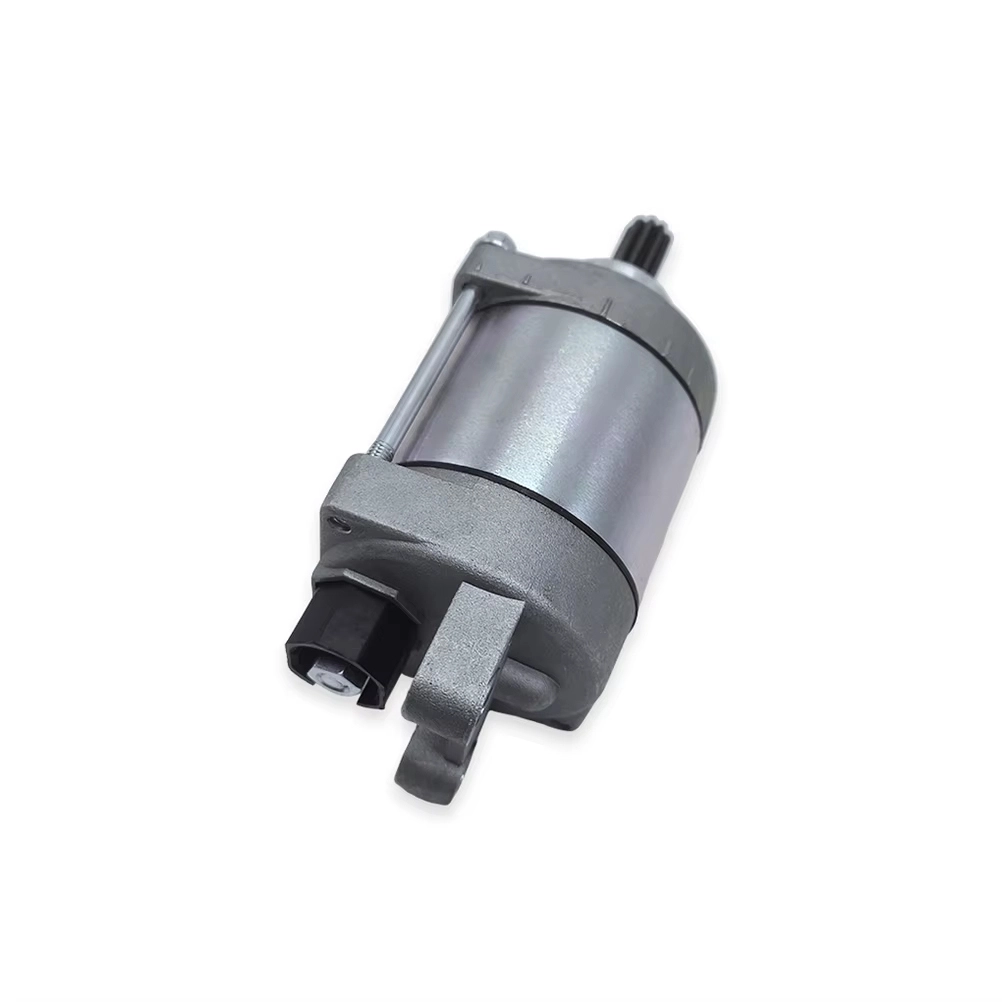
If you are a new motorcycle rider, a DIY maintenance enthusiast, or an automotive learner, understanding the main components of a motorcycle is the foundation of safe riding, daily maintenance, and fault troubleshooting. A modern motorcycle is a sophisticated combination of mechanical and electrical systems, with dozens of core parts working together to deliver stable power, precise control, and reliable driving performance.
In this guide, we will break down the key motorcycle components into six core categories, explaining their functions, types, and importance. This structured overview helps you fully grasp how a motorcycle works and why regular component maintenance matters.
1. Motorcycle Engine (Power Core)
The engine is universally recognized as the heart of a motorcycle. It converts gasoline combustion energy into mechanical power, providing all the driving force for the vehicle. Without a functional engine, a motorcycle cannot generate power or move forward.
Key Engine Components & Types
- Core internal parts: Piston, cylinder block, cylinder head, crankshaft, and valve train. These parts cooperate to complete air intake, compression, combustion, and exhaust cycles.
- Stroke classification: Most mainstream motorcycles adopt four-stroke engines with stable performance and low fuel consumption, while lightweight off-road models use two-stroke engines with stronger instantaneous power.
- Cooling systems: Natural air cooling (for daily commuter bikes) and water cooling (for high-displacement, high-power motorcycles) prevent engine overheating during long rides or high-speed driving.
- Cylinder layout: Common types include single-cylinder, parallel-twin, V-twin, and inline-four cylinders, which directly affect the motorcycle’s power output and riding vibration.
2. Transmission System (Power Transmission Unit)
The motorcycle transmission system acts as a power bridge between the engine and wheels. It transmits engine power to the rear wheels while allowing riders to adjust speed and torque through gear shifting, adapting to different road conditions such as flat roads, slopes, and bumpy pavements.
Main Transmission Components
- Clutch: Controls connection and disconnection between the engine and transmission system, ensuring smooth gear shifting and avoiding engine stall.
- Gearbox: Provides multiple gear ratios to switch between low-speed high-torque climbing mode and high-speed low-torque cruising mode.
- Drive components: Drive chain, sprockets, or drive shafts. Most civilian motorcycles use chain transmission for low cost and high transmission efficiency, while high-end touring bikes adopt shaft transmission for lower noise and longer service life.
3. Chassis & Frame System (Vehicle Skeleton)
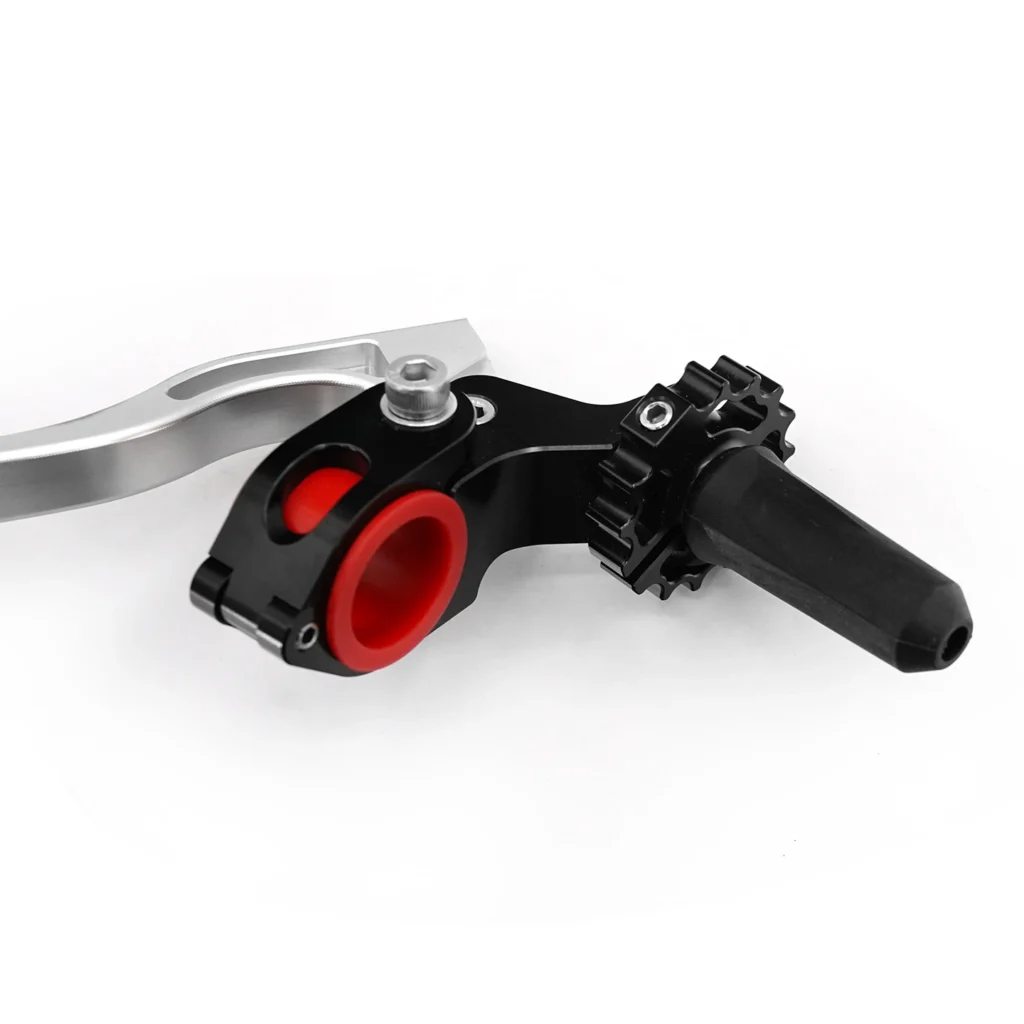
The chassis is the skeleton of a motorcycle, supporting all components and bearing vehicle weight and driving impact. It determines the motorcycle’s structural stability, flexibility, and overall durability.
Core Chassis Components
- Main frame: Made of high-strength steel, aluminum alloy, or lightweight carbon fiber. It fixes the engine, fuel tank, seat, and suspension parts, maintaining the overall structural integrity of the motorcycle.
- Suspension system: Includes front telescopic forks and rear shock absorbers. It buffers road vibration and bumps, improving riding comfort and ensuring tire grip on uneven roads.
- Wheels & tires: The only parts that contact the ground. Tires provide friction for driving, braking, and cornering, while wheel hubs support tire stability and bear vehicle load.
4. Braking System (Safety Control Unit)
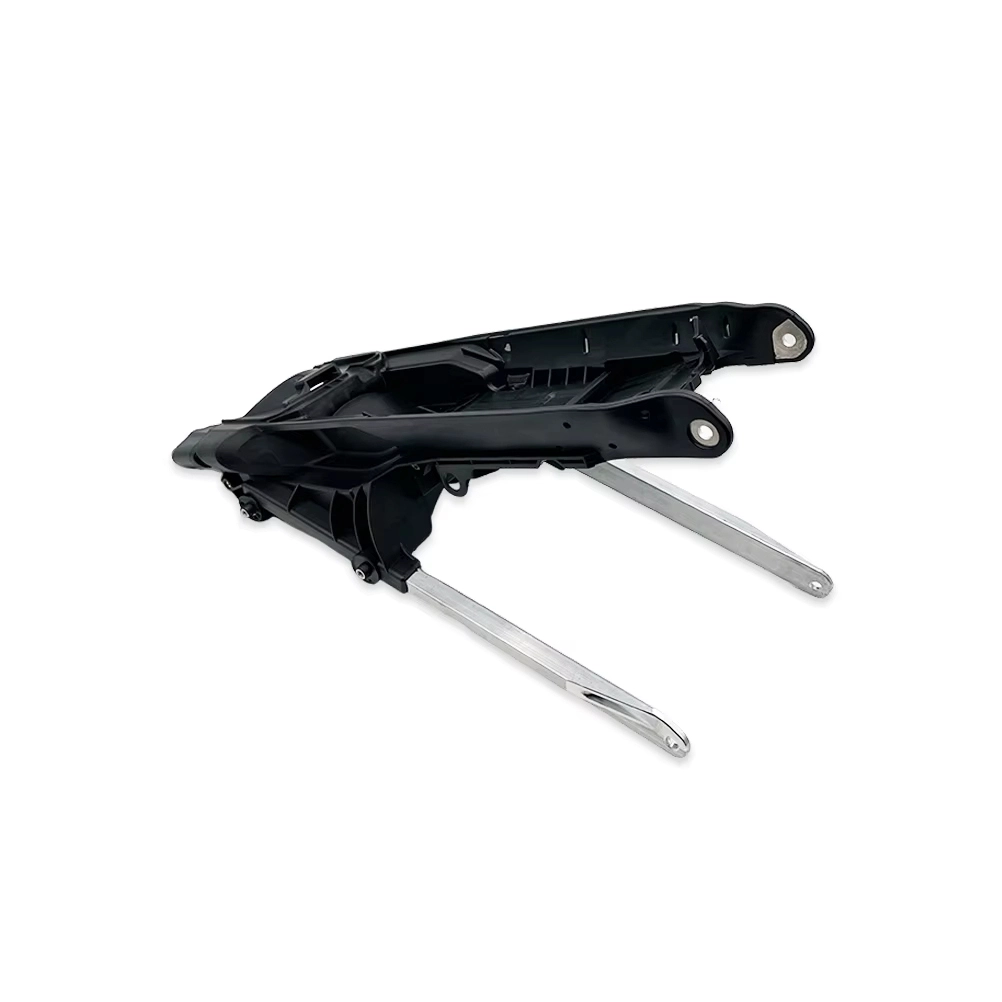
The braking system is the most critical safety component of a motorcycle, responsible for decelerating and stopping the vehicle. A sensitive and stable braking system directly guarantees riding safety.
Key Braking Components & Types
- Front and rear brakes: The front brake is controlled by the right handlebar lever, and the rear brake by the foot pedal. Front brakes provide most of the braking force, while rear brakes assist in stable deceleration.
- Brake types: Hydraulic disc brakes are widely used in modern motorcycles, featuring fast response and stable braking effect. Some entry-level models still adopt drum brakes with simple structure and low maintenance cost.
- Auxiliary safety parts: ABS (Anti-lock Braking System) prevents wheel locking during emergency braking, effectively avoiding skidding and rollover, and has become a standard configuration for most new motorcycles.
5. Steering System (Direction Control Unit)
The steering system controls the driving direction of the motorcycle, directly affecting the vehicle’s flexibility and handling accuracy. It works with the suspension system to ensure stable cornering and straight-line driving.
Main Steering Components
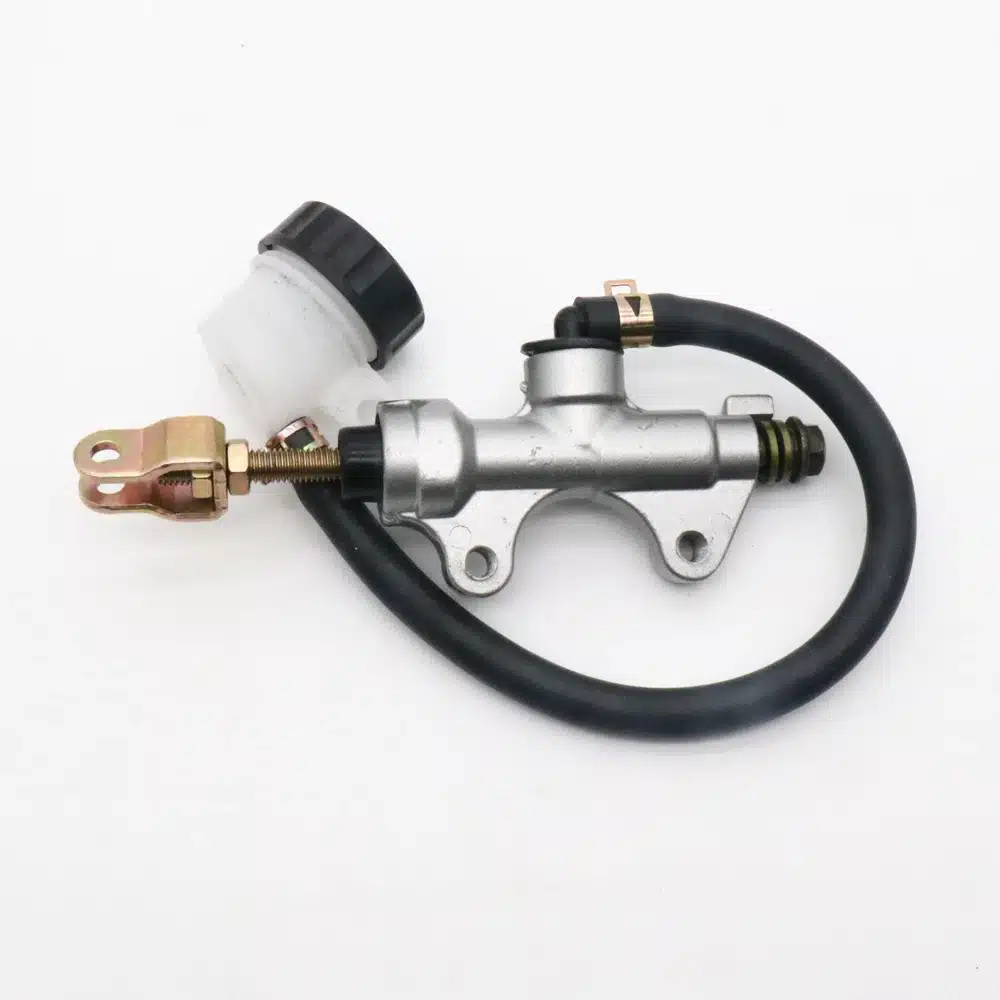
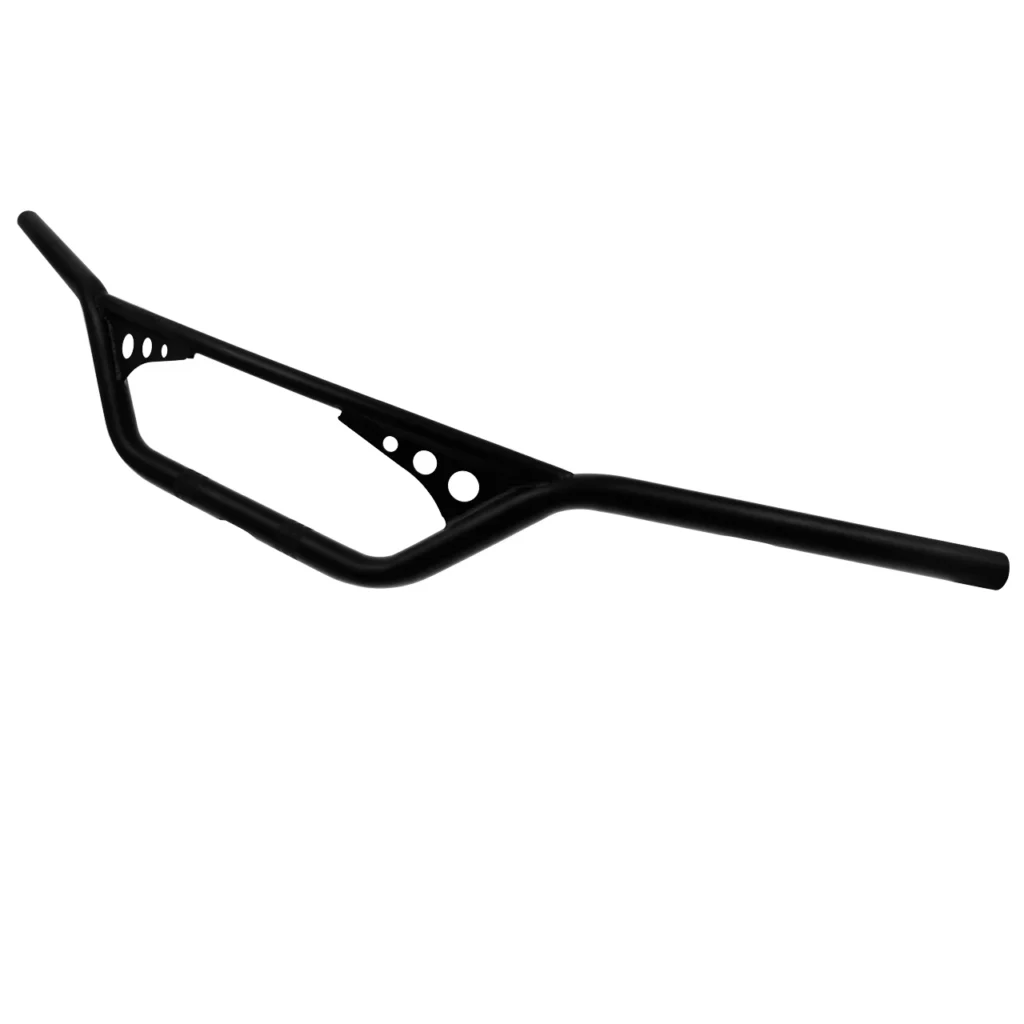
- Handlebars: The core operating part for riders to control direction, also equipped with control switches for lights, horn, and throttle.
- Front fork assembly: Connects the frame and front wheel, cooperating with the steering bearing to realize flexible left and right turning.
- Steering bearings: Reduce friction during steering, ensuring smooth and precise direction adjustment without jamming.
6. Electrical & Instrument System (Intelligent Control Unit)
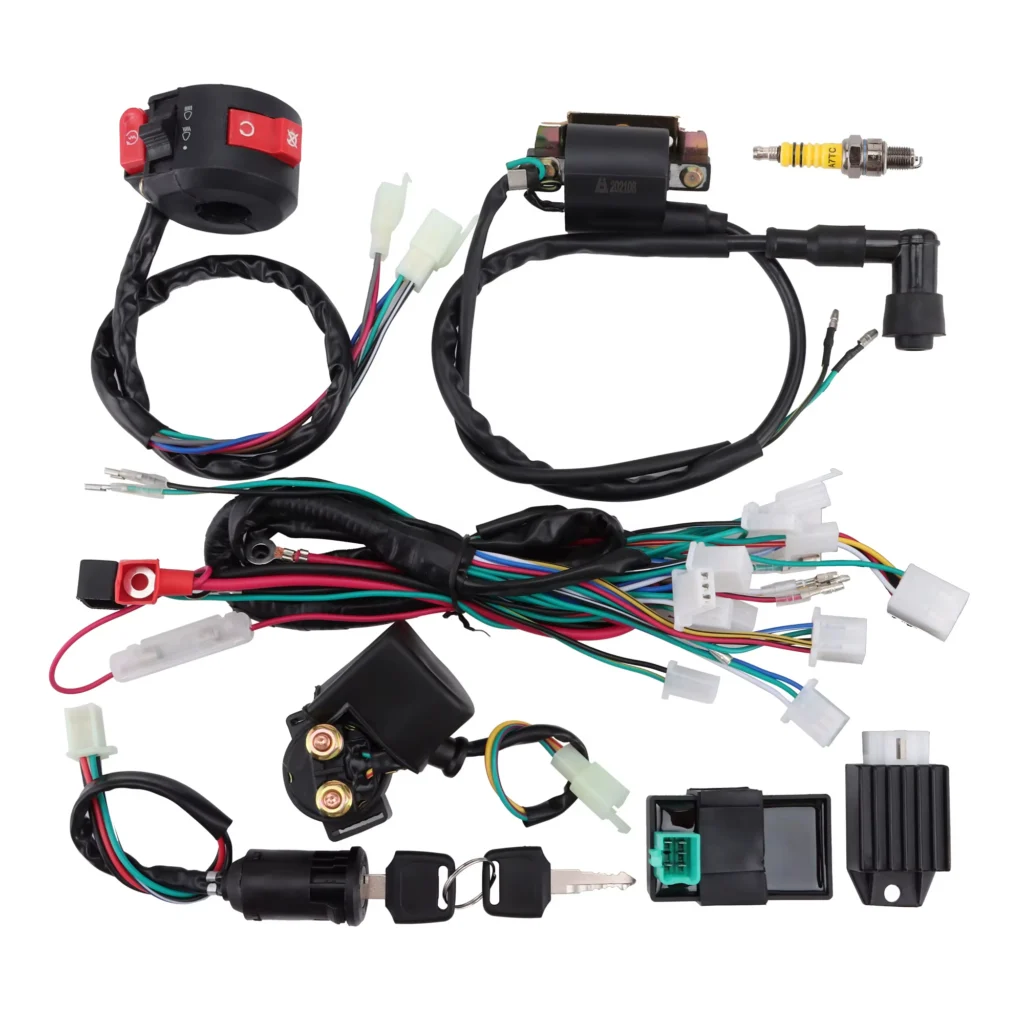
The electrical system is the nerve center of a motorcycle, responsible for power starting, ignition, lighting, and real-time data display. It ensures normal startup, daily lighting, and intelligent monitoring of the vehicle status.
Core Electrical Components
- Battery & generator: The battery provides power for starting and electrical equipment, while the generator continuously charges the battery during engine operation.
- Ignition system: Includes ignition coils and spark plugs, which ignite the mixed gasoline and air in the cylinder to power the engine.
- Lighting & signal system: Headlights, taillights, turn signals, and brake lights ensure driving visibility and traffic safety day and night.
- Instrument panel: Displays real-time data such as speed, engine speed, fuel level, and mileage, allowing riders to grasp vehicle conditions in real time.
Why It’s Important to Learn Motorcycle Main Components
Mastering the main components of a motorcycle brings multiple benefits for riders. First, it helps you conduct daily self-inspection and simple maintenance, reducing after-sales maintenance costs. Second, you can quickly judge faulty parts when the motorcycle has abnormal noise, weak power, or poor braking, improving troubleshooting efficiency. Most importantly, understanding component performance helps you develop standardized riding habits, avoid component damage caused by improper operation, and extend the motorcycle’s service life.
Final Words
A complete motorcycle consists of six major systems: engine, transmission, chassis, braking, steering, and electrical instruments. Every core component is indispensable, and their coordinated operation ensures efficient, stable, and safe driving. For all motorcycle enthusiasts, familiarizing yourself with these basic components is the first step to proficient riding and professional vehicle maintenance.